“Are the mentally ill violent? Are the mentally ill at increased risk of violence? Are the public at risk?”

These were the questions investigated by research published in the journal of the World Psychiatric Association.
The short answer is
NO
(except for substance abuse):
“Mental disorders are neither necessary nor sufficient causes of violence. Major determinants of violence continue to be socio-demographic and economic factors. Substance abuse is a major determinant of violence and this is true whether it occurs in the context of a concurrent mental illness or not.”
Stuart H. Violence and mental illness: an overview. World Psychiatry. 2003 Jun;2(2):121-4
“Economic factor” refers to poverty.
In most countries, people living in poor neighborhoods have higher levels of violence and aggression.
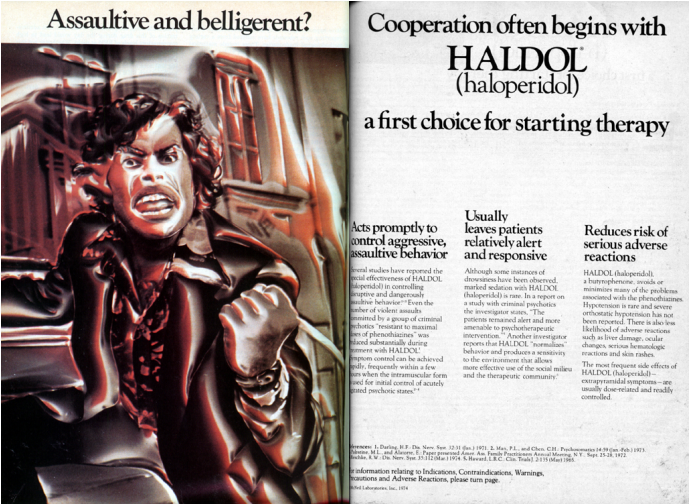
Pharmaceutical companies picked up the message about “violent schizophrenics” to advertise their products like the newly-created Haldol. Image source:
https://thesocietypages.org/socimages/2011/05/23/the-racialization-of-mental-illness/comment-page-1/
What changes the balance is substance abuse.
According to research, “risk of violent offending among people with common mental disorders, other than substance use disorders, can be attributed to factors other than their mental illness.”
Less than 5% of mass shooters in the US have “gun-disqualifying mental health records.”
In very rare cases, “acute psychotic symptoms such as paranoid delusions contribute” to gun violence, but
most of it is NOT “caused by mental illness.”
Crownview Psychiatric Institute: “Aggression, Violence, and Mental Illness: Is There a Connection?”
In plain language, “socio-demographic factors” are the person’s gender, age, ethnicity/race, education, and family situation.
Some examples of “socio-demographic factors”:
Young males in all countries show the highest rates of violence and aggression of all sorts. This means that being a young male is a major risk factor for violence.
Jeffrey Todd Ulmer, Darrell J. Steffensmeier, “The age and crime relationship: Social variation, social explanations,” in The Nurture Versus Biosocial Debate in Criminology: On the Origins of Criminal Behavior and Criminality (Sage Publications, 2014), pp. 377-396.
The violent crime rate is higher among Americans with less education – more crime is committed by people who have only finished high school than by people with a college degree, and more yet by high-school dropouts. This means that low education level is a risk factor for violence.
Education Levels of Federally Sentenced Individuals, US Sentencing Commission, 2023; Yuliya Klemansky, “The Clear Correlation between Education and Crime.”
The rate of violent crime among people of the same age and gender living in similar circumstances is the same regardless of whether they are diagnosed with serious mental illness or not.
What this all means is that more violence is committed by young men with a low level of education living in a poor neighborhood than by middle-aged women with a college degree living in an affluent neighborhood (surprise!)
Mental illness does not play a role here – a boy with a serious mental illness diagnosis who dropped out of school is as likely to be violent as other boys in his neighborhood who dropped out of school. A college-educated middle-aged individual with a serious mental illness diagnosis is as likely to be violent as other middle-aged college-educated people from the same neighborhood.
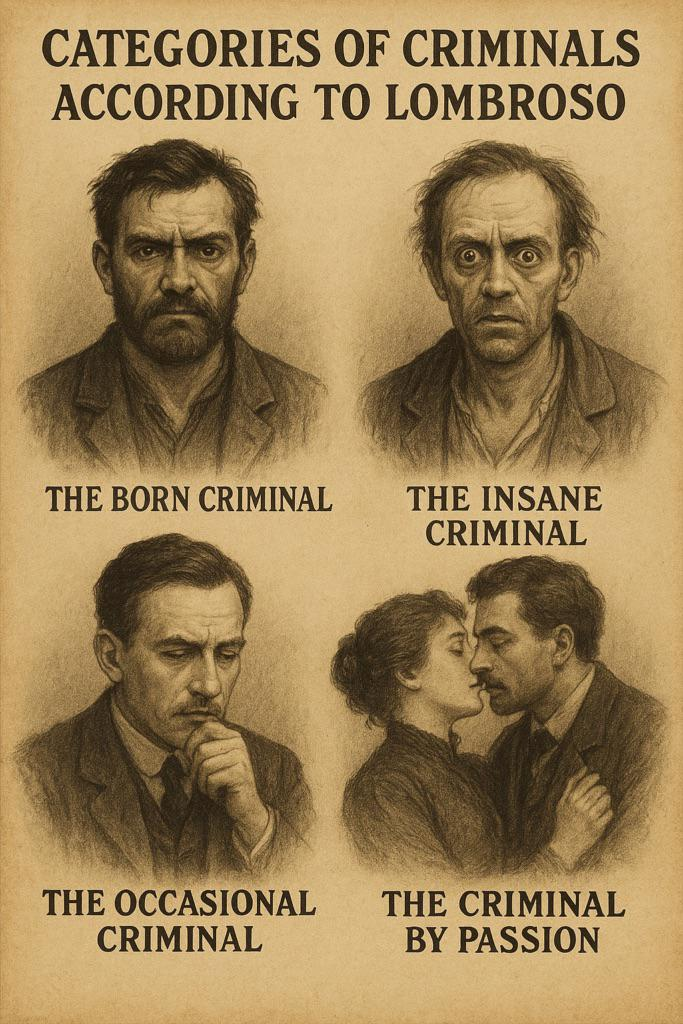
The nineteenth-century psychiatrist Cesare Lombroso argued that criminality and mental illness were connected and that it was possible to determine if a person was a dangerous “born criminal” by measuring their scull, earlobes and other physical features. These are illustrations from his book Criminal Man.

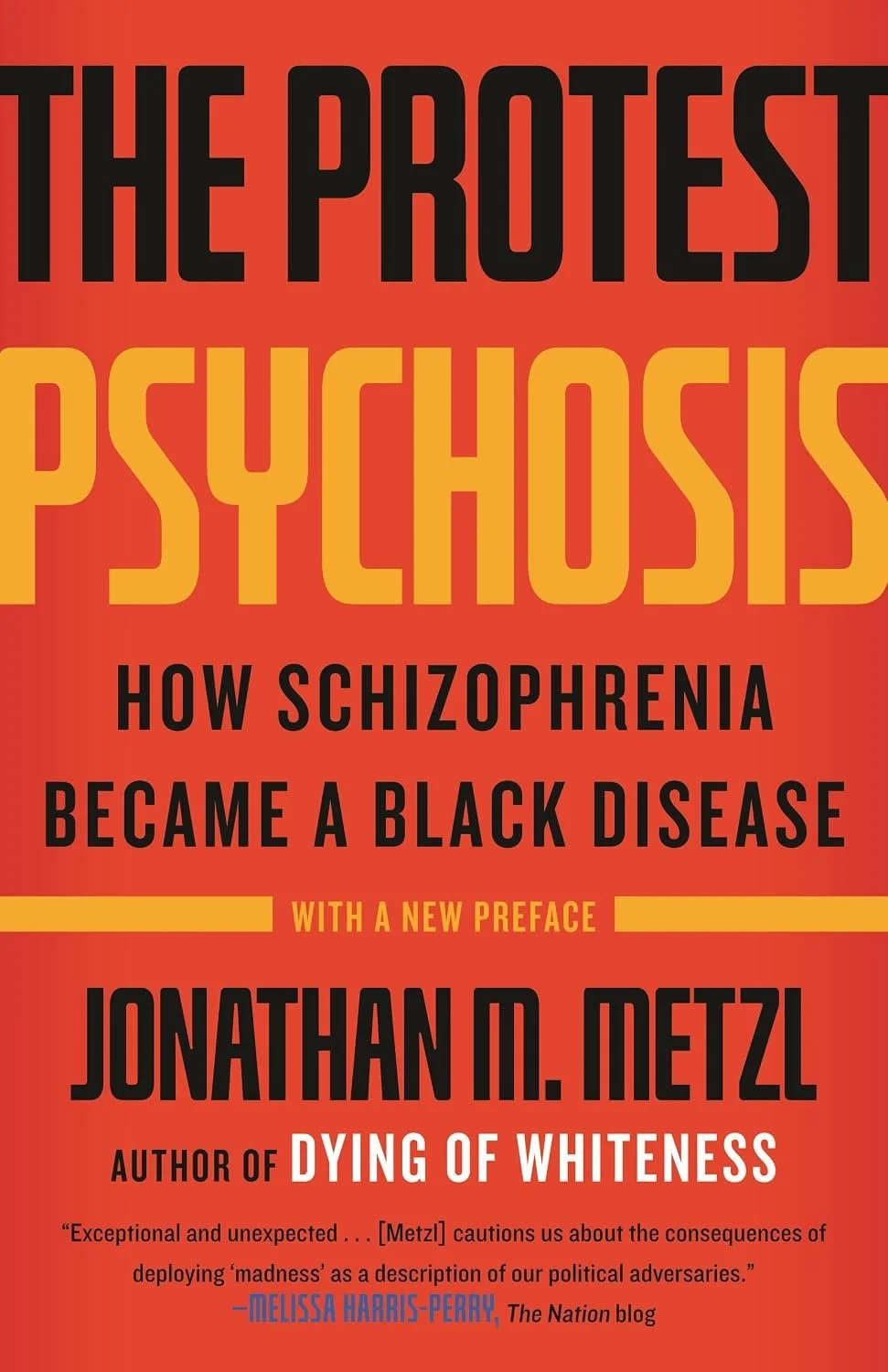
The idea that “schizophrenics are dangerous” first started in the 1960s and 1970s, when some influential American psychiatrists claimed that participation in civil rights protests caused violent schizophrenic symptoms in Black Americans with “delusional beliefs” that “their civil rights were being compromised or violated.” Bromberg W, Simon F. The "protest" psychosis. A special type of reactive psychosis. Arch Gen Psychiatry. 1968 Aug;19(2):155-60; Raskin, Allen., Thomas H. Crook, and Kenneth D. Herman, “Psychiatric History and Symptom Differences in Black and White Depressed Inpatients.” Journal of Consulting and Clinical Psychology 43(1):p 73-80, February 1975 .
Before that time, people diagnosed with schizophrenia were considered harmless. Read this book by Jonathat Merzl. He is a psychiatrist, a sociologist, and the director of the Department of Medicine, Health, and Society, at Vanderbilt University.

Of course, abusing substances is never a good idea, and it increases the risk of violence for everyone, mental illness or not. However, research shows that a dual diagnosis – mental illness and substance abuse combined – increases the level of aggression more than “mental illness” or “substance abuse” alone. According to the same research: “Surprisingly, severity of psychiatric symptoms did not predict later aggression.”
What does this all mean for family members?
If you loved one uses substances, they are at increased risk for violent behavior.
A mental health crisis in itself – without substance abuse – does not make your loved one dangerous or aggressive.
If a person talks and behaves in a strange way, sees and hears things that are not there, says something that does not make sense to you, you have a reason to think that they need help – but no real reason to be afraid of them.
It is also important to remember that your own behavior has an impact on your loved one.
Researchers studying the subject of mental illness and violence note that “it is challenging to disentangle unprovoked violence, such as that resulting from responding to a command hallucination, from reacting antagonistically to a person behaving threateningly.” That is, when a person assaults somebody, do they do it for no reason, just because a voice in their head told them to do so out of the blue? Or is it really self-defense rather than an unprovoked assault? Or is it an overblown reaction to a threat?
Some people with a serious mental illness diagnosis become aggressive in response to “victimization by mental health professionals and families, including physical violence, verbal violence, restraint, neglect of basic human needs and rights, deception, and lack of informed consent.”
Of course, there can be no excuse for physical violence other than strictly in self-defense, and if this is happening in your family you have every right and reason to call the police immediately.
However, the best course of action is prevention – try not to create a situation that may lead to hostile escalation and aggression.
You can’t control the actions of mental health professionals towards your loved one, but you can choose your own actions.