
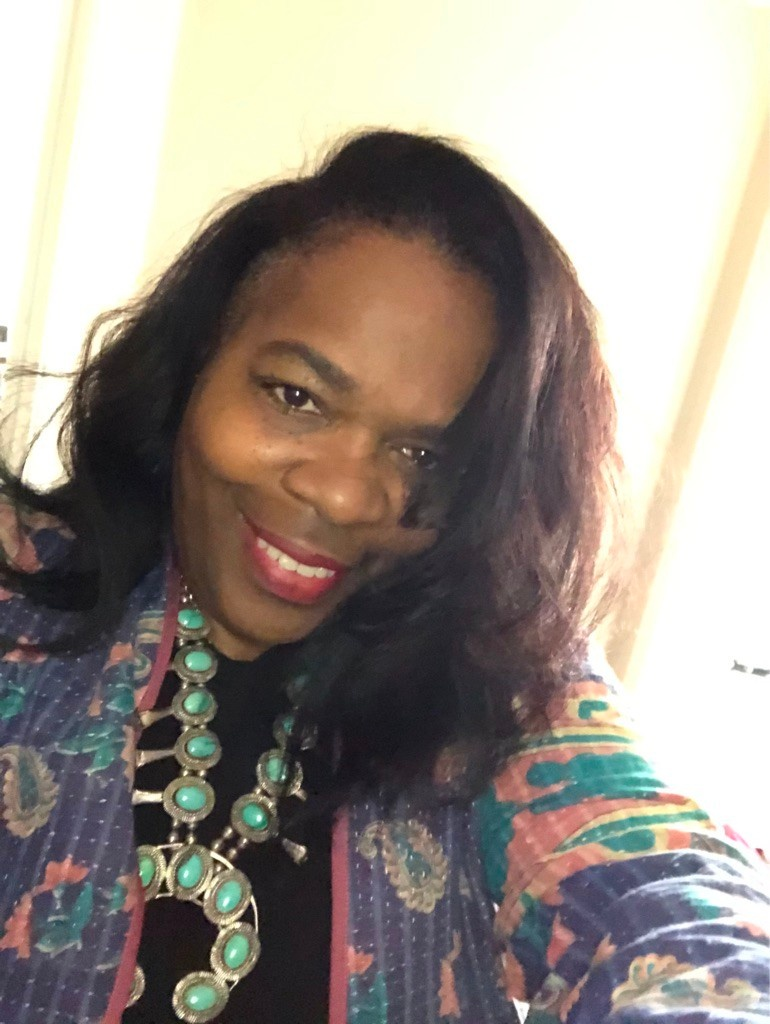
Keris Myrick, M.B.A., M.S., Ph.D
Vice President of the Center for Health Care Strategies.
Diagnosed with schizoaffective disorder and obsessive-compulsive disorder,rejects her diagnoses and the usefulness of psychiatric diagnoses in general, saying, “You can call it whatever you want to call it … what is important for me, Keris Myrick, is to be happy and live my life.” When interviewed in 2011, she said that she had not used any antipsychotic medication for more than a year, but occasionally used anti-anxiety medications; a 2012 publication stated, “Myrick takes medication only as needed,” without mentioning what type of medication and how often. There is no recent publicly available information about her medication use. Starting in 2000, she was often suicidal, paranoid and hallucinating; she experienced homelessness and was hospitalized six times in six years. The doctors told her that she would not be able to go to college, have a job, or live independently. She then received three advanced degrees, published academic papers, and had a number of leadership positions with governmental and non-profit organizations.
A turning point occurred when she realized that she needed the type of work that would not “suffocate” her creativity, eventually using “a high-profile executive job as defense against mental ills.” “An essential part of her recovery” were therapeutic relations with the psychiatrist Timothy Pylko, who supported her use of medications on an as-needed basis. She could consult with him without fear that he would force her to take medications when she did not want to, and he gave her “instructions on how to taper [from the drug] as well.” In 2006, she took antipsychotics for six months on a daily basis; for a few years after that, she only took them occasionally, when voices in her head became “very distracting” and she could not control them with “[non-drug] techniques,”such as counting repetitively to ten, cuddling with her dog, or booking a hotel for the weekend. She objects to inaccurate claims “that my recovery was due to ‘adherence to medication’.” She is currently a vice-president of the Center for Health Care Strategies. She opposesforced treatment and “pursues global human rights issues focusing on the integration of holistic, accessible, culturally aligned care and supports for those most marginalized.”
Web page: https://www.patdeegan.com/keris-myrick-cpmc
YouTube videos:
Podcast: https://linktr.ee/UnapologeticallyBlackUnicorns
Peer-reviewed research publications: https://www.researchgate.net/scientific-contributions/Keris-Myrick-2221326354